Personality Science 11 min read
The Triads of the Soul
Mapping the Spectrum of Human Malice and Altruism
"Every saint has a past, and every sinner has a future."
— Oscar Wilde
In psychology, the "Dark Triad" (Narcissism, Machiavellianism, Psychopathy) and the "Light Triad" (Kantianism, Humanism, Faith in Humanity) represent the extremes of human social strategy. We all fall somewhere on the spectrum between these two poles. Understanding your scores in both is essential for true self-integration.
01The Dark Triad: Survival and Strategy
The Dark Triad describes three overlapping but distinct traits that share a common theme: the prioritization of self-interest over collective welfare.
**Narcissism** is the need for admiration and a grandiose self-concept. **Machiavellianism** is the strategic manipulation of social situations for personal gain. **Psychopathy** is the reduced capacity for empathy and remorse, enabling cold, calculated decision-making.
- Narcissism: Grandiosity and admiration-seeking
- Machiavellianism: Strategic social manipulation
- Psychopathy: Reduced empathy, calculated action
- All three exist on a spectrum — moderate levels are common
02Ethical Machiavellianism: Strategy for Good
While Machiavellianism is often seen as purely manipulative, it can be repurposed for prosocial ends. This is "Ethical Machiavellianism." It involves using strategic insight, social leverage, and calculated negotiation to protect the vulnerable or advance a noble cause.
Think of a whistleblower who carefully plans their exit to ensure the truth comes out safely. They are using Machiavellian tactics (secrecy, planning, social manipulation) to serve a higher moral goal (truth and justice).
- Strategic Insight + Prosocial Goals = Ethical Machiavellianism
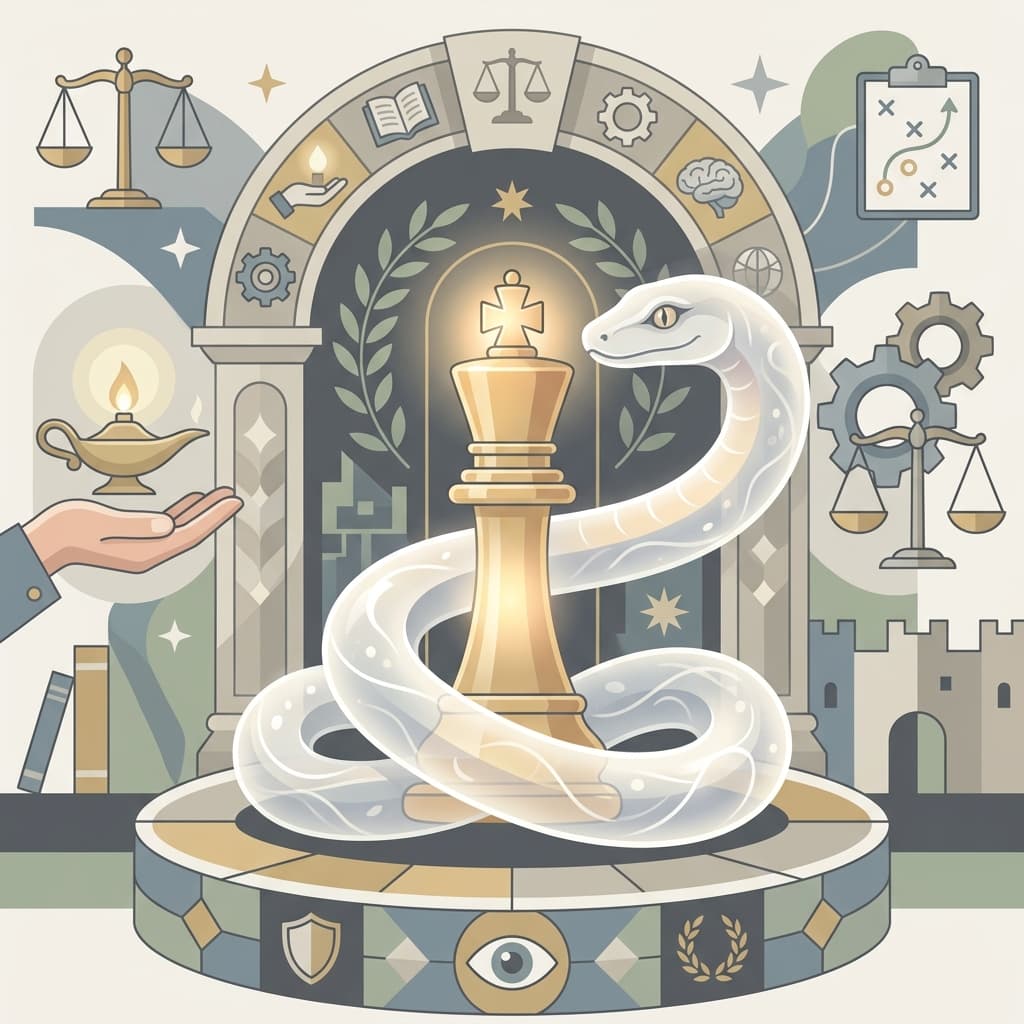
- The "Wise Serpent": Being shrewd without being malicious.
- Using influence to navigate power structures for the common good.
Key Insight
The most effective leaders are often "Light-dominant" but have enough "Dark" strategic awareness to prevent being exploited.
03The Light Triad: The Prosocial Impulse
Identified by Dr. Scott Barry Kaufman, the Light Triad measures our "brighter" side:
**Kantianism**: Treating people as ends in themselves, not means to an end.
**Humanism**: Valuing the dignity and worth of every individual.
**Faith in Humanity**: Default belief in human goodness.
04Your Shadow Profile
When you take both assessments, the cross-dimensional analysis reveals your "Shadow Profile" — the interplay between your protective strategies (Dark) and your prosocial instincts (Light). A person with high Narcissism and high Humanism, for example, might be a charismatic humanitarian.
05Integration: The Whole Self
Jung argued that psychological health comes not from eliminating the shadow but from integrating it. The goal is not to score "zero" on the Dark Triad — that would mean having no strategic self-interest. The goal is awareness. When you know your Dark tendencies, you can choose when to deploy them consciously.
Key Takeaways
- 1The Dark and Light Triads are two poles of social strategy, not moral judgments.
- 2Ethical Machiavellianism uses strategic insight for prosocial goals.
- 3Most people score moderately on multiple traits from both Triads.
- 4Effective leadership requires a calibrated blend of both.
- 5Integration — not elimination — is the path to psychological wholeness.
Continue Reading
Performance Science
Chronotype Scheduling
10 min · Peak Performance from Your Biological Clock