Performance Psychology 11 min read
The Paradox of Choice
Mastering Decision-Making in an Over-Stimulated World
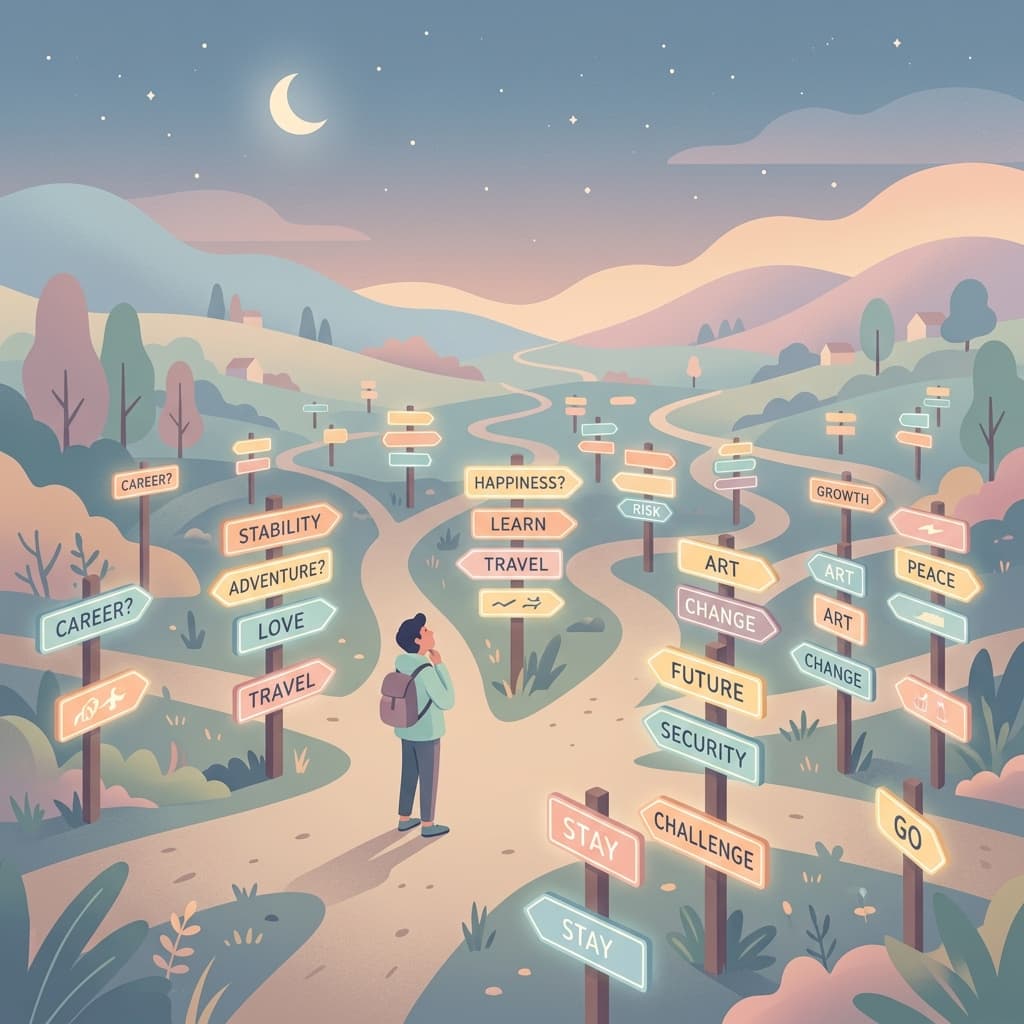
"As the number of choices grows, the negative aspects of having a multitude of options begin to explode."
— Barry Schwartz
We are told that more choice equals more freedom. But in reality, an abundance of options often leads to "Decision Paralysis" and lower satisfaction with the eventual choice. In the modern world, where we face thousands of micro-decisions daily, mastering the "Paradox of Choice" is essential for protecting your mental bandwidth and maintaining peak performance.
01Maximizers vs. Satisficers
Psychologist Barry Schwartz identifies two primary styles of decision-making. **Maximizers** exhaust themselves searching for the absolute best option, constantly comparing and fearing "Buyer's Remorse." **Satisficers** identify their core criteria and choose the first option that meets those standards. Research consistently shows that while Maximizers might get slightly better outcomes, Satisficers are significantly happier and less stressed.
- The high cost of 'The Best'
- Satisficing: The secret to long-term contentment
02The Biological Reality of Decision Fatigue
Every decision you make, from what to wear to how to solve a complex project, depletes a finite reserve of mental energy. By the time you reach the afternoon, your "Decision Muscle" is exhausted. This leads to impulsive choices, irritability, and the avoidance of high-stakes problems. High-performers protect their "Deep Work" by automating mundane decisions early in the day.
Warning
Never make high-stakes life or career decisions in the evening when your biological decision-making capacity is at its lowest.
03The Art of Intentional Constraint
Freedom isn't the absence of boundaries; it is the ability to choose your own. By setting "Default Rules" for your life, you eliminate thousands of choices. Examples include:
1. **The Uniform Strategy**: Standardizing your wardrobe or meals to save bandwidth.
2. **The 2-Minute Rule**: If a decision takes less than 2 minutes, make it immediately and never think about it again.
3. **The 'Hell Yeah' or 'No' Filter**: If an opportunity doesn't immediately excite you, the answer is a default 'No'.
- Constraints as a catalyst for focus
- Eliminating the 'Middle Ground' of indecision
04Recovering from Choice Anxiety
To reduce post-decision regret, practice "Closing the Door." Once a choice is made, stop looking at the alternatives. Remind yourself that "Good is Great." Your satisfaction comes from how you live out the choice, not the theoretical perfection of the choice itself.
- Emotional finality: The key to stopping the 'What If' loop
- Mastering the 'First Choice' instinct
Key Takeaways
- 1More options often lead to anxiety and regret, not satisfaction.
- 2Maximizers strive for the 'best' possible choice; Satisficers settle for 'good enough'.
- 3Decision Fatigue is a real biological limit on your willpower.
- 4Constraints are a tool for creative and emotional freedom.
- 5Learning to 'ignore' is as important as learning to choose.
Continue Reading
Performance Psychology
Identifying Soul Burnout
12 min · Detecting the Symptoms Before 'Quiet Quitting' Happens