Performance Psychology 9 min read
The Power of 'Not Yet'
The Neurobiology of the Growth Mindset
"The hand you are dealt is just the starting point. It is what you do with it that determines your destiny."
— Carol Dweck
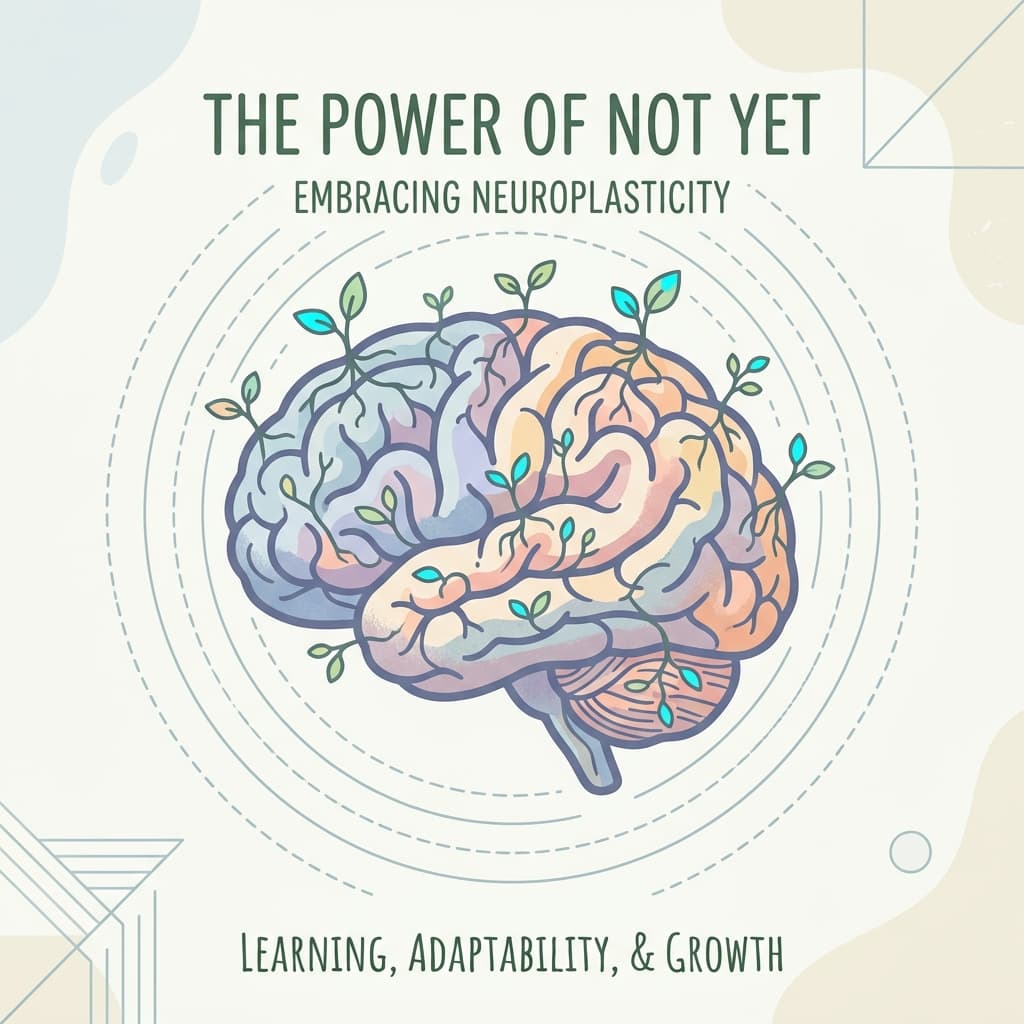
For years, we believed the brain was fixed after childhood. We now know this is false. Neuroplasticity—the brain's ability to reorganize itself by forming new neural connections—is the biological basis for the "Growth Mindset." By shifting our internal monologue from "I can't do this" to "I can't do this *yet*," we literally rewire our nervous system for resilience and high-performance.
01Fixed vs. Growth: The Cognitive Divide
Carol Dweck’s research identifies two fundamental ways we process challenges. A **Fixed Mindset** believes intelligence and talent are static traits. This leads to a fear of looking "stupid" and an avoidance of difficult tasks. A **Growth Mindset** believes that most abilities can be developed through dedication and hard work. For the Growth Mindset, a challenge is not a threat to the ego, but a "Workout" for the brain.
- The Ego Trap: Why 'Being Smart' is a dangerous label
- The Resilience Engine: Turning setbacks into fuel
02The Neurobiology of Effort
Every time you struggle with a difficult problem, your brain is under "Biological Friction." This friction is the signal for **Myelination**—the process where neural pathways are insulated with a fatty substance called myelin, making them faster and more efficient. The "I can't do it" feeling is actually the physical sensation of your brain changing. If it feels easy, you aren't growing; if it feels hard, you're evolving.
Key Insight
The feeling of 'frustration' during learning is the neurochemical prerequisite for plasticity. Embrace the struggle.
03Rewiring Your Monologue
To transition to a Growth Mindset, you must intercept your "Fixed" thoughts and reframed them using the "Yet" Protocol:
- **Old Thought**: "I'm just not good at math." -> **New Thought**: "I haven't mastered this specific concept *yet*."
- **Old Thought**: "I failed this project." -> **New Thought**: "This iteration provided the data I need to succeed on the next one."
- **Old Thought**: "They are naturally more talented than me." -> **New Thought**: "They have likely put in more hours of 'Deliberate Practice' *yet*."
- The 'Yet' Protocol: The most powerful word in growth
- Deliberate Practice: Pushing just beyond your comfort zone
04Building a Growth Environment
Growth doesn't happen in a vacuum. To sustain a Growth Mindset, you must surround yourself with "Mirroring People"—those who value process over prestige. When giving feedback (to yourself or others), always focus on the strategy and the effort, not the innate ability. This keeps the focus on the **controllables**, which is the foundation of high-performance psychology.
- Process over Prestige
- Focus on the Controllables: The Stoic overlap
Key Takeaways
- 1Neuroplasticity is a lifelong capability of the human brain.
- 2Fixed Mindsets view failure as a 'Verdict' on identity.
- 3Growth Mindsets view failure as 'Data' for the next iteration.
- 4Effort is the mechanism that strengthens neural pathways.
- 5Praising 'Process' over 'Result' fosters long-term resilience.
Continue Reading
Professional Intelligence
Shadow Leadership
13 min · Navigating the Blind Spots of High-Performers