Cognitive Functions: The Stellar Architecture
Decoding the 8 Engines of Human Consciousness
"Everything that irritates us about others can lead us to an understanding of ourselves."
— Carl Jung
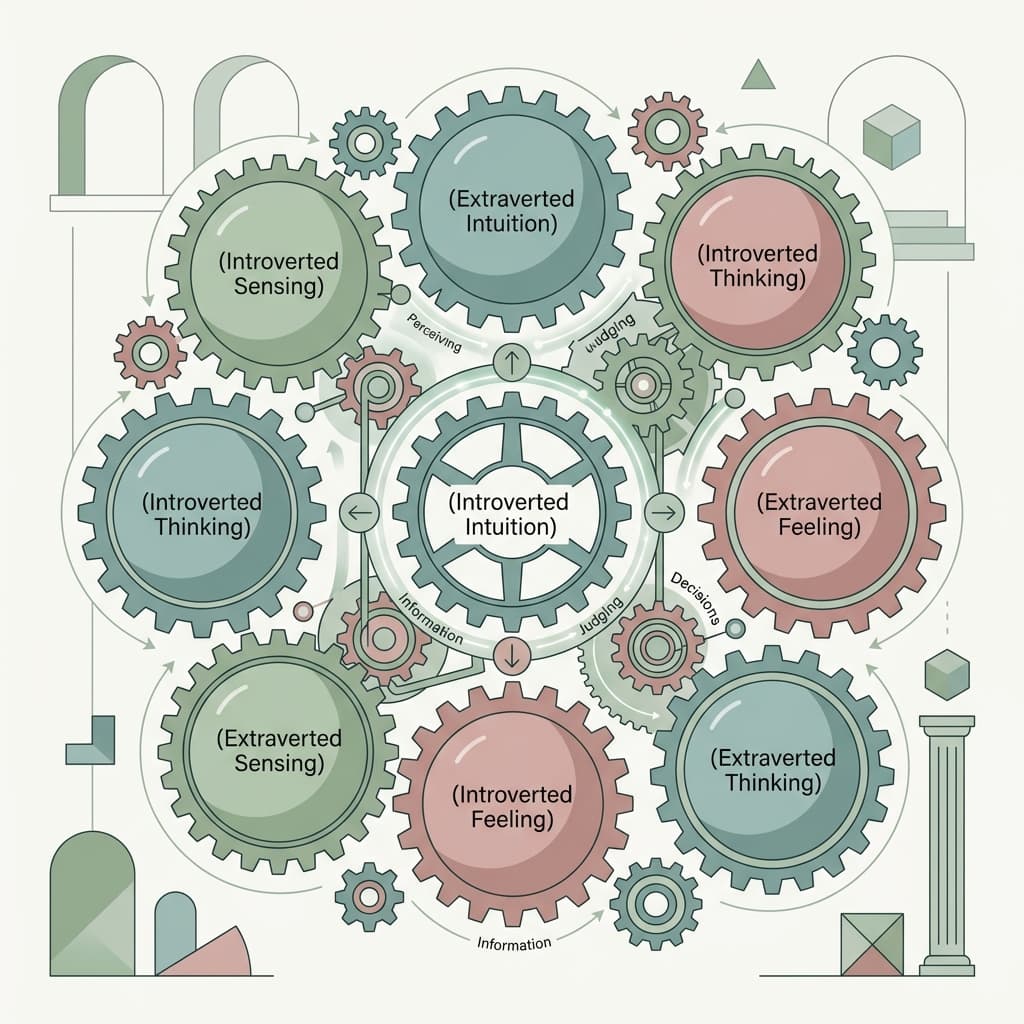
Beyond simple 4-letter labels lies the "Cognitive Function" model — the engine room of your personality. Developed by Carl Jung and refined by the MBTI system, these eight functions describe how you perceive information (Sensing/Intuition) and how you make decisions (Thinking/Feeling). Understanding your specific "Function Stack" is the key to unlocking why you think, react, and grow the way you do.
01Perception vs. Judgment
- Perception: Sensing (S) and Intuition (N)
- Judgment: Thinking (T) and Feeling (F)
- Orientations: Introverted (i) vs. Extroverted (e)
02The Dominant Function: Your Hero
Your Dominant function is where you feel most confident, but it can also be your "blind spot" because you rely on it too heavily.
03The Auxiliary Function: Your Co-Pilot
04The Inferior Function: The Doorway to the Soul
- The "Grip": Stress-induced regression into the inferior function
- Aspiration: The inferior function as a source of long-term life goals
- Balance: Learning to respect the function you find most difficult
05Shadow Functions: The Unconscious Stack
- The Shadow is not evil; it is unintegrated potential.
- Projection: We often hate in others what we cannot accept in our own Shadow.
- Integration: Bringing the Shadow into consciousness through self-reflection.
Ignoring your Shadow Functions leads to "Self-Sabotage." Acknowledging them allows you to harness their raw energy for creative growth.
Key Takeaways
- 1Personality is a "stack" of cognitive functions, not a static label.
- 2Balance is found in the interplay between Perception and Judgment.
- 3The "Inferior Function" is both your greatest weakness and your path to maturity.
- 4The "Grip" state reveals your personality under extreme stress.
- 5Shadow Functions represent the unconscious potential for self-sabotage and transformation.
The 5-Temperament Masterclass
12 min · From Ancient Greece to Modern Psychology