Relational Psychology 13 min read
Attachment Styles: The Blueprint of Love
How Your Infancy Shapes Your Adult Relationships
"The way we are loved in our first three years determines how we love for the rest of our lives."
— John Bowlby
Attachment Theory is perhaps the most validated framework in modern psychology. It posits that our early interactions with caregivers create an "Internal Working Model" of how relationships work. This model follows us into adulthood, influencing how we handle intimacy, conflict, and vulnerability.
01The Four Styles
There are four primary attachment styles:
**Secure**: Comfortable with intimacy and independence.
**Anxious**: Craves intimacy but fears abandonment.
**Avoidant**: Values independence over intimacy; sees closeness as a threat.
**Disorganized**: A mix of anxious and avoidant; often the result of trauma.
- Secure: The gold standard of relational health
- Anxious: The "Preoccupied" style
- Avoidant: The "Dismissive" style
- Disorganized: The "Fearful-Avoidant" style
02The Anxious-Avoidant Trap
In a cruel twist of psychology, Anxious and Avoidant types are often magnetically attracted to each other. The Anxious partner pursues, the Avoidant partner retreats. This creates a "Push-Pull" dynamic that can last for years, leaving both parties exhausted and unfulfilled.
Warning
The "Anxious-Avoidant Trap" is often mistaken for "Passionate Love" because of the intense highs and lows.
03The Secure Transition Roadmap
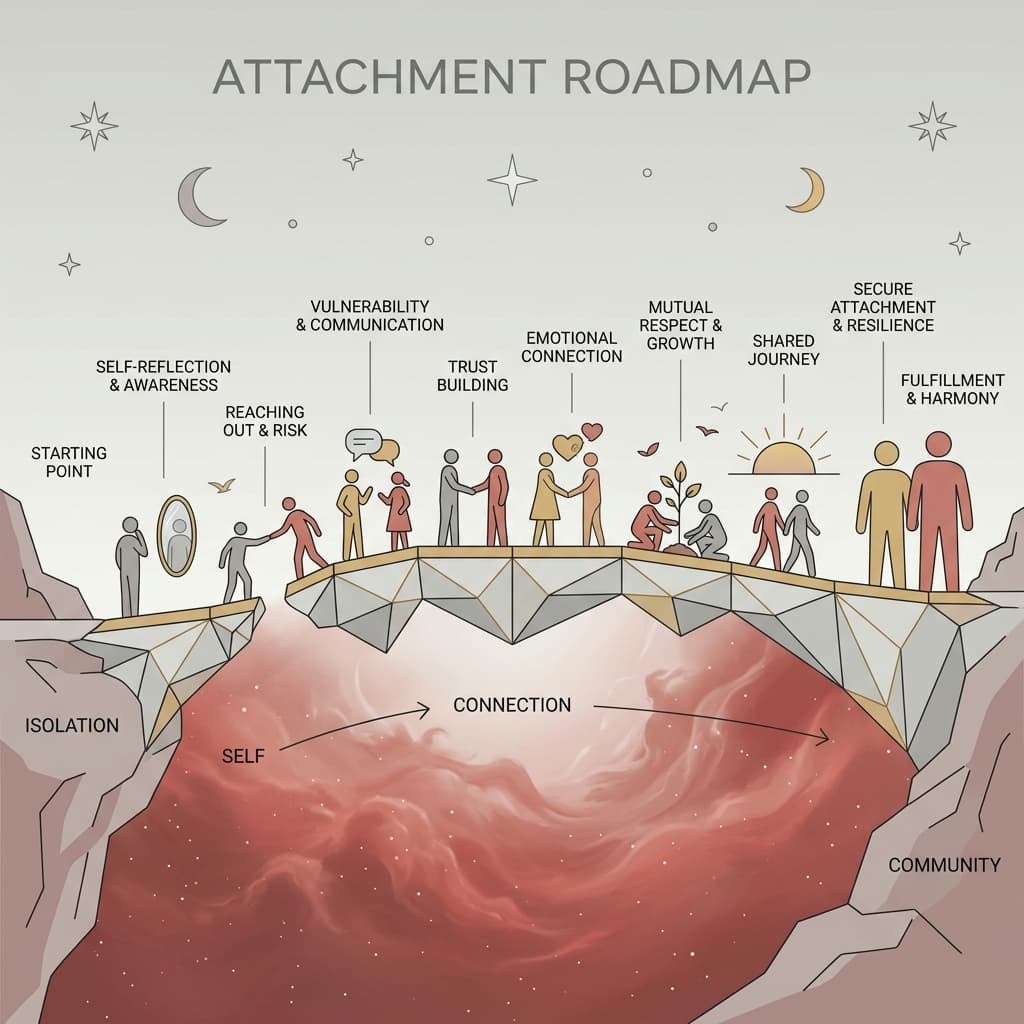
Your attachment style is not a life sentence. Through "Earned Security," you can shift toward a Secure style. This requires three key steps:
1. **Self-Regulation**: Learning to soothe your own nervous system when triggered (e.g., deep breathing instead of "protest behavior").
2. **Socratic Inquiry**: Challenging the "stories" you tell yourself ("They didn't text back because they hate me" vs. "They are probably just busy").
3. **Co-Regulation**: Choosing partners who are Secure or who are actively working on their own growth.
- Earned Security: The process of becoming secure through intentional work.
- Protest Behavior: Anxious attempts to regain closeness (e.g., multiple texts).
- Deactivating Strategies: Avoidant attempts to regain distance (e.g., going cold).
04Navigating Intimacy
Growth comes from moving toward what scares you. For the Avoidant, this means practicing vulnerability. For the Anxious, this means practicing independence and trust. For both, it means learning "Effective Communication" — stating needs clearly and without blame.
Key Takeaways
- 1Attachment styles are internal models of how to give and receive love.
- 2The "Anxious-Avoidant Trap" is a common but toxic relational loop.
- 3Security can be "earned" through self-awareness and regulation.
- 4Identifying your triggers is the first step toward relational freedom.
- 5Effective communication is the antidote to attachment-based conflict.
Continue Reading
Personality Science
The Triads of the Soul
11 min · Mapping the Spectrum of Human Malice and Altruism